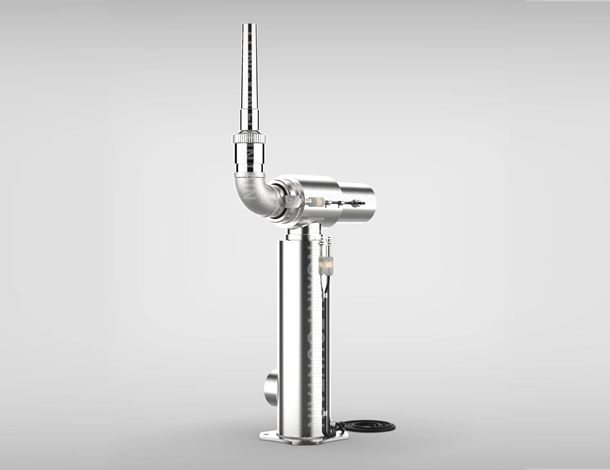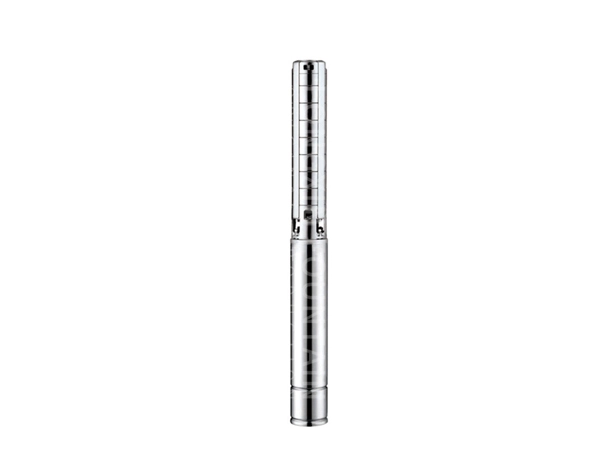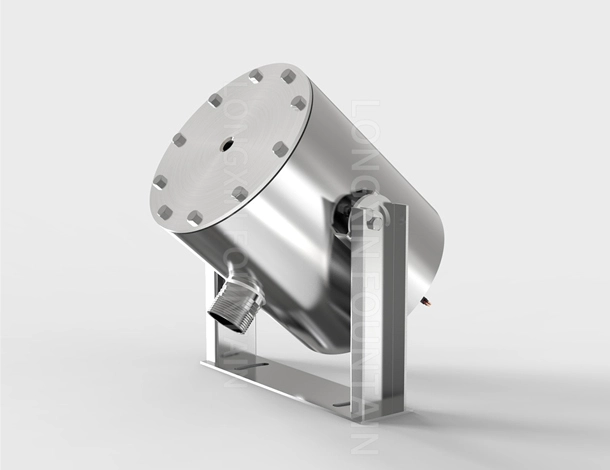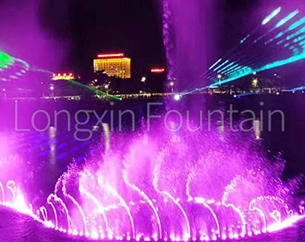
Retrofitting led fountain lights into an existing water feature is usually more efficient than replacing the entire lighting system, but compatibility must be verified before selecting replacement fixtures. The critical checks are the existing mounting dimensions, operating voltage, cable connections, fixture depth, control method, beam angle, and waterproof construction.
A successful retrofit should preserve the existing fountain structure while improving illumination, reliability, energy efficiency, or control capability. For a waterproof light for water fountain, the replacement fixture must also be suitable for continuous immersion and compatible with the existing electrical and mechanical infrastructure.
The first step is to document the existing installation rather than immediately selecting a new fixture.
Record the following information for every fixture:
Existing fixture diameter and height
Mounting method and fixing dimensions
Installation depth
Input voltage and wattage
Cable length and cable specification
Connector or termination type
Existing control protocol
Current beam angle
Light color or RGB configuration
Number of fixtures in each circuit
Condition of brackets, conduits, and junction points
The physical dimensions are particularly important for retrofit projects. A new fixture may have suitable electrical specifications but still be impossible to install without modifying the existing mounting structure.
It is also useful to photograph the existing fixtures, cable entries, mounting brackets, and electrical connections before removal. This provides a reference when preparing the replacement schedule.
Often, yes, but only when the replacement fixture is electrically compatible with the existing system.
Voltage is the first requirement. A 12V fixture should not be connected directly to a circuit designed for a different operating voltage unless the appropriate power conversion equipment is installed.
The total electrical load must also be checked. Replacing older fixtures with more efficient LEDs can reduce power consumption, but adding higher-output fixtures may increase the load on existing transformers, power supplies, cables, and protection devices.
Cable length should also be reviewed. Long underwater cable runs can produce voltage drop, which may affect light output and color consistency.
For retrofit led fountain lights, the electrical assessment should therefore include:
| Check | Why It Matters |
|---|---|
| Input voltage | Prevents electrical incompatibility |
| Fixture wattage | Determines circuit loading |
| Transformer capacity | Confirms available power |
| Cable size | Affects voltage drop |
| Cable length | Influences delivered voltage |
| Connector type | Determines connection compatibility |
| Grounding/isolation | Supports electrical safety |
| Control system | Determines dimming or color control |
If the existing infrastructure cannot support the new fixtures, the retrofit scope should include the necessary power or control-system upgrades.
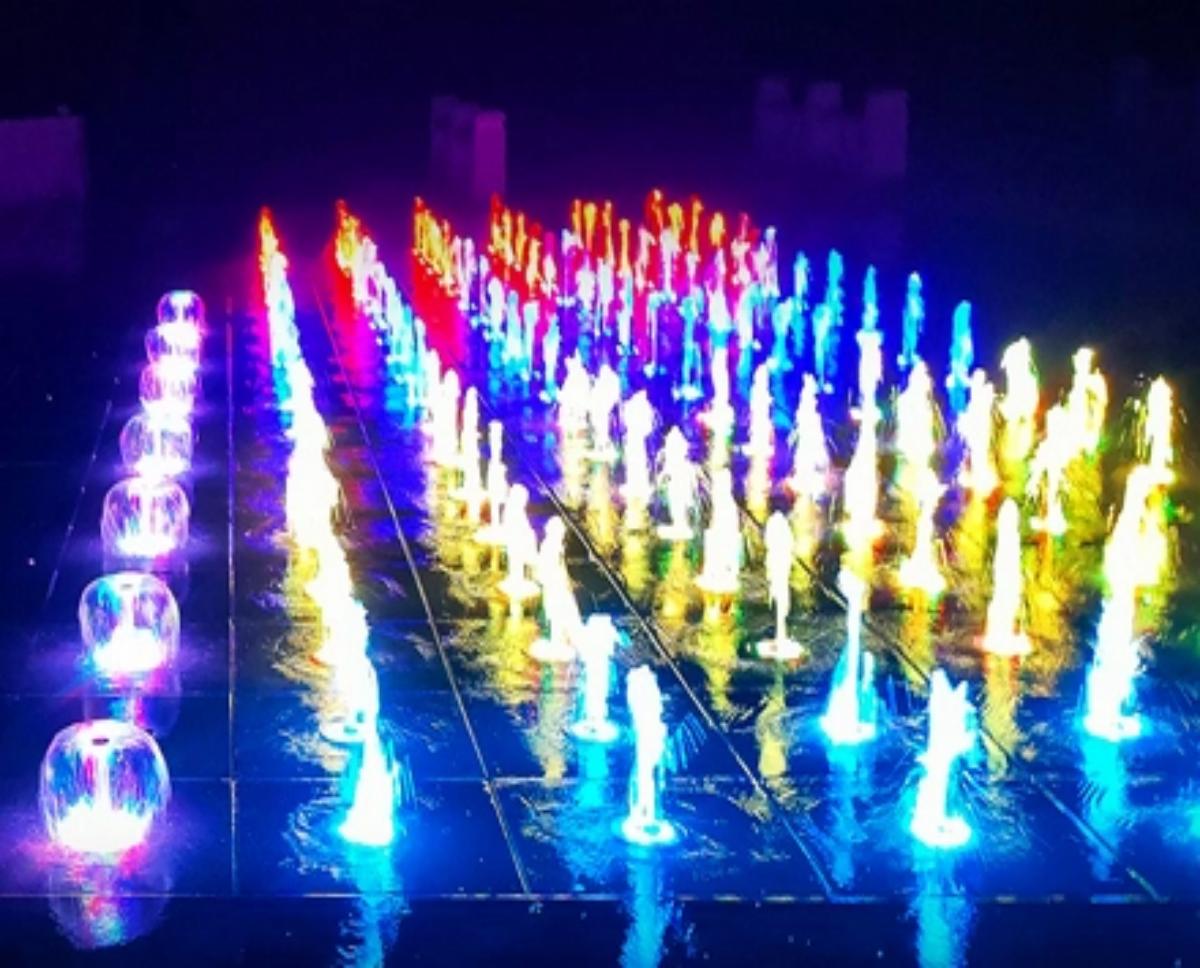
The replacement should be selected according to the existing water feature's visual requirements, not simply by matching the old fixture's wattage.
A higher-wattage LED does not necessarily produce a better result. Optical efficiency, beam distribution, lens design, LED performance, and fixture positioning all affect the final appearance.
For example, a narrow beam can be appropriate for illuminating a concentrated vertical jet, while a wider beam may be better for a water curtain or broad cascade.
The replacement specification should consider:
Light output: Match the required illumination rather than automatically increasing wattage.
Beam angle: Select an optic appropriate to the water pattern and viewing distance.
Color: Confirm whether the existing system requires white, RGB, RGBW, or another configuration.
Control: Determine whether the new fixtures need DMX or another control method.
Dimensions: Verify that the replacement fits the existing mounting location.
Environmental protection: Select a fixture designed for the actual immersion conditions.
This approach prevents a common retrofit problem: technically compatible fixtures that produce an inconsistent visual effect compared with the rest of the fountain.
For continuously submerged fixtures, IP68 is commonly required, but the rating should not be treated as the only waterproof specification.
A waterproof light for water fountain must protect its electrical components against long-term water exposure. The enclosure, lens seal, gasket, cable gland, connector, and cable entry all contribute to overall water resistance.
Before replacing an existing fixture, confirm:
IP rating
Manufacturer's immersion test conditions
Maximum recommended installation depth
Housing material
Lens and gasket construction
Cable-entry method
Connector protection
Potting or encapsulation, where applicable
This is particularly important when retrofitting older fountains because existing cable routes or junction points may have deteriorated even if the original fixtures were adequately protected.
RGB or DMX retrofits require additional attention because the replacement fixture must communicate correctly with the existing control system.
First, confirm the control protocol and fixture channel configuration. An RGB fixture configured for three channels may not behave correctly if the existing controller expects a different channel arrangement.
DMX addresses should also be mapped before commissioning. Each independently controlled fixture or group needs an appropriate address range.
For a water fountain with led lights, the retrofit process should preserve the intended relationship between lighting zones and water effects. If the existing system has separate zones for inner jets, outer rings, waterfalls, or spray nozzles, the new fixtures should be assigned to the same logical groups unless the project is intentionally being redesigned.
After installation, test individual fixtures first, then zones, and finally the complete show sequence.
Not necessarily. A phased replacement can be practical when only part of the existing lighting system has failed or when the project has budget constraints.
However, mixing old and new fixtures requires careful evaluation. Differences in LED color temperature, RGB color output, brightness, beam angle, and optical design can become visible when fixtures illuminate the same water pattern.
If phased replacement is necessary, use fixtures with consistent specifications and test them alongside the remaining units before completing the installation.
For major commercial fountains, replacing fixtures by complete hydraulic or visual zones is often preferable to replacing random individual units.
A controlled retrofit process reduces the risk of damaging existing infrastructure.
Document fixture positions, electrical circuits, control zones, mounting hardware, and cable routes.
Check dimensions, voltage, wattage, cable configuration, control protocol, beam angle, and immersion requirements.
Before installing new fixtures, inspect cables, brackets, conduits, junction boxes, transformers, and control equipment.
Disconnect power and follow the approved electrical isolation procedure before removing submerged fixtures.
Use compatible mounting hardware and position each fixture according to the original or revised lighting plan.
Verify electrical performance, waterproof integrity, control response, and fixture alignment.
Adjust beam direction and output while observing the fountain from the primary viewing locations.
Night-time commissioning is particularly valuable because underwater reflections, glare, and uneven illumination may not be obvious during daylight.
Several issues appear repeatedly in replacement projects.
Mounting mismatch: The new fixture does not fit the existing bracket or opening.
Voltage incompatibility: The new fixture requires a different voltage than the existing power system.
Insufficient cable capacity: Existing cables create excessive voltage drop.
Control mismatch: RGB or DMX fixtures do not match the existing controller configuration.
Uneven color: New and old fixtures use different LED or optical specifications.
Water ingress: Existing cable entries or connection points have deteriorated.
Incorrect beam angle: The new fixture illuminates the water differently from the original design.
These problems are easier to avoid when the retrofit is treated as an engineering project rather than a simple product replacement.
A replacement schedule can be prepared using the following format:
| Specification | Existing System | Replacement Requirement |
|---|---|---|
| Fixture type | Existing model | LED fountain lights |
| Quantity | Existing quantity | Confirm |
| Voltage | Existing voltage | Match or upgrade |
| Wattage | Existing wattage | Project requirement |
| Dimensions | Existing size | Compatible |
| Beam angle | Existing optic | Match or redesign |
| Light color | Existing color | Match requirement |
| Control | Existing system | DMX / other |
| Mounting | Existing hardware | Confirm compatibility |
| Cable | Existing cable | Check condition and capacity |
| IP rating | Existing rating | Suitable for immersion |
| Housing | Existing material | Project environment |
| Installation depth | Existing depth | Replacement rating required |
| Commissioning | Existing performance | Night-time alignment |
This document can be issued to suppliers when requesting quotations for replacement led fountain lights, allowing different manufacturers to quote against the same technical requirements.
Retrofitting an existing water feature with new LED lighting should begin with an infrastructure survey, not product selection. Electrical compatibility, mounting dimensions, cable condition, control architecture, beam angle, and waterproof construction all need to be verified before replacement fixtures are ordered.
For a water fountain with led lights, the objective should be more than restoring illumination. A properly planned retrofit can improve energy efficiency, color consistency, control flexibility, and long-term reliability while preserving the existing fountain structure.
Selecting a waterproof light for water fountain applications with the correct IP protection, materials, optical characteristics, and electrical configuration helps ensure that the upgraded system performs reliably under continuous underwater conditions.
Yes. Existing fixtures can often be replaced with LEDs if the new fixtures are compatible with the electrical, mechanical, and control systems.
For continuously submerged installations, IP68 is commonly specified, but the manufacturer's actual immersion conditions should also be checked.
They may be reusable if their condition, conductor size, insulation, connectors, and voltage-drop performance meet the new fixture requirements.
Yes, provided the replacement fixtures use a compatible DMX configuration and channel structure.
Not necessarily. LED output and optical efficiency should be evaluated based on the required visual result rather than wattage alone.
Ordering replacement fixtures before checking mounting dimensions, voltage, cable compatibility, control requirements, and underwater installation conditions.
 +86-17378775697
  English