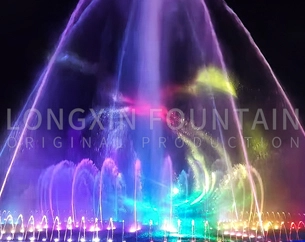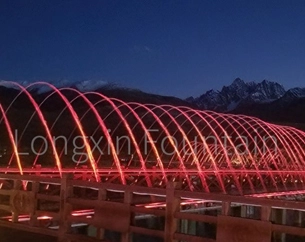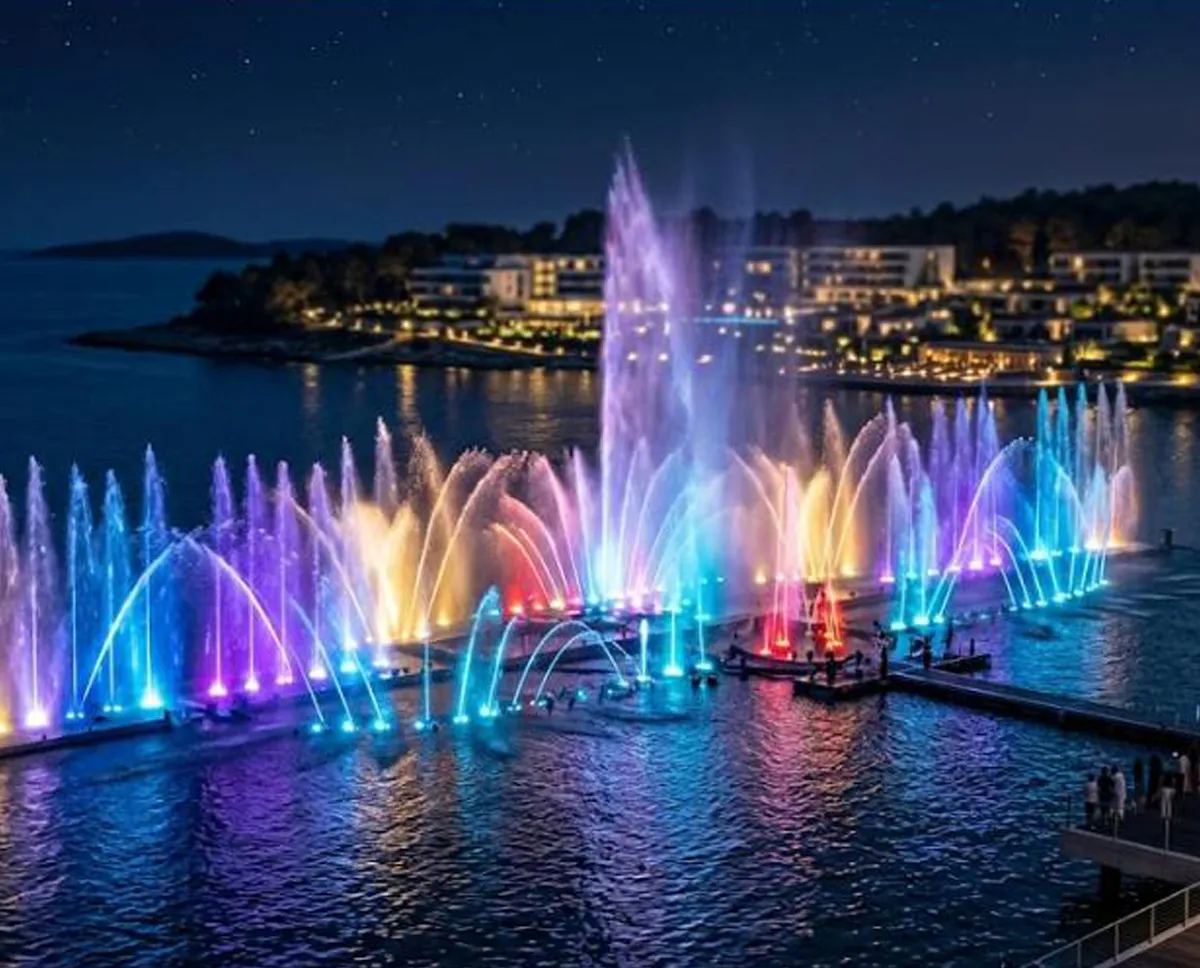
A dry deck fountain is one of the most innovative and versatile water features in modern landscape design. Unlike traditional fountains with visible basins, this type of fountain is installed flush with the ground, allowing people to walk, play, and interact directly with the water jets.
Today, dry deck fountains are widely used in public plazas, commercial complexes, and urban developments due to their safety, flexibility, and strong visual appeal. In this comprehensive guide, we will explore how these fountains work, their advantages, design principles, installation process, and how to choose the right partner among fountain manufacturers such as Longxin.
A dry deck fountain is a water feature where all mechanical components—such as pumps, pipes, and drainage systems—are hidden beneath a solid surface, typically made of stone or concrete. Water jets shoot upward through ground-level nozzles and drain back into an underground reservoir.
No visible standing water
Flush, walkable surface
Interactive water jets
Hidden mechanical system
This design makes the dry floor fountain both aesthetically clean and highly functional, especially in high-traffic areas.
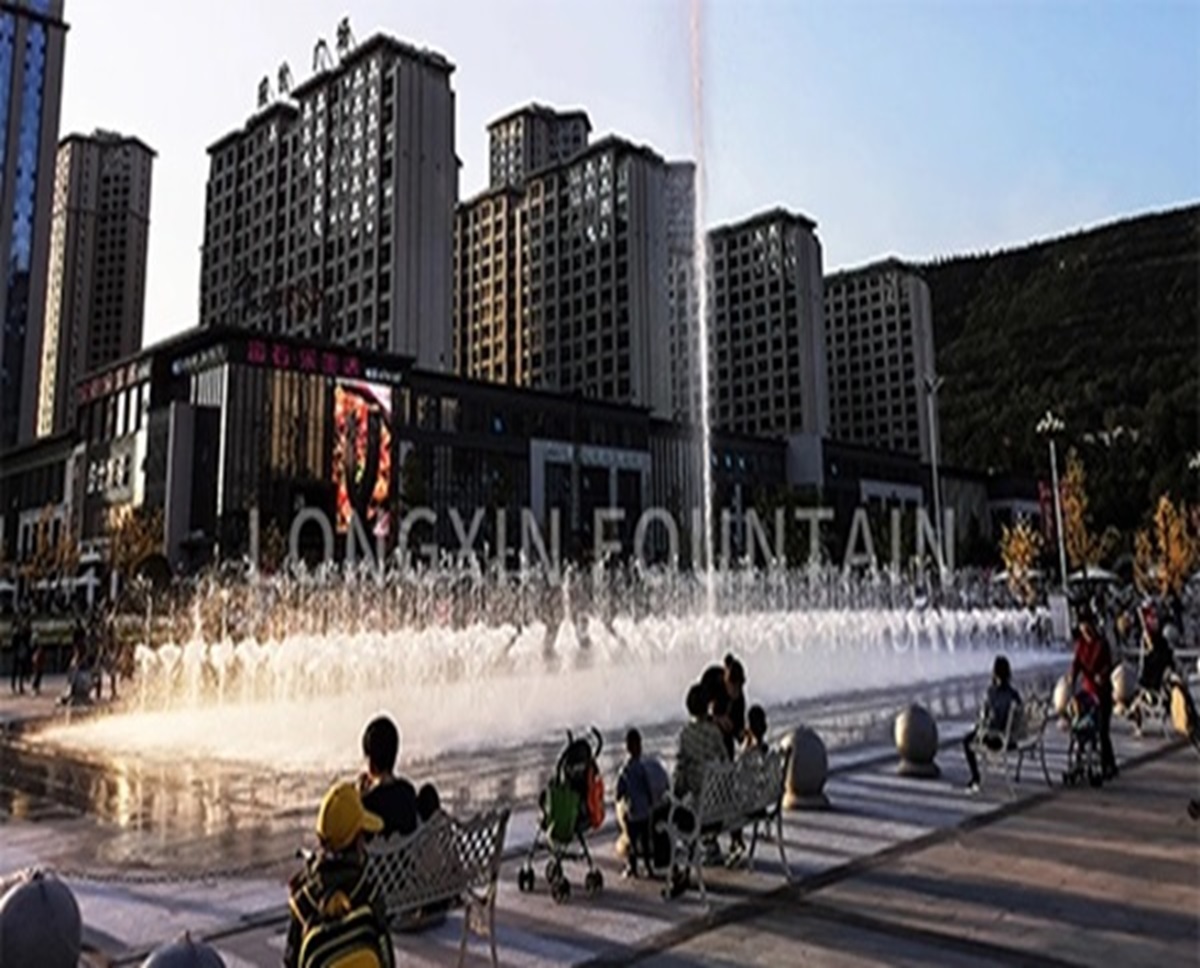
Investing in a dry water fountain goes beyond visual enhancement—it delivers tangible commercial and social benefits.
Since there is no exposed basin, the area can serve multiple purposes:
Pedestrian walkway
Event space
Interactive play zone
Unlike traditional fountains, dry deck fountains invite interaction. Children can play in the water, and visitors can walk through the jets, increasing dwell time and engagement.
Developers often use dry floor fountains to:
Attract more visitors
Increase retail foot traffic
Improve overall property appeal
With no open water pool, the risk of drowning is significantly reduced, making it ideal for public environments.
Dry deck fountains are particularly effective in urban and commercial environments.
| Advantage | Description |
|---|---|
| Safety | No standing water reduces hazards |
| Accessibility | Fully walkable surface for all users |
| Flexibility | Space can be used for multiple functions |
| Low Visual Obstruction | Clean, minimalist appearance |
| High Engagement | Encourages public interaction |
These benefits make the dry water fountain a preferred choice for city planners and developers.
Designing a successful dry deck fountain requires balancing aesthetics, engineering, and user experience.
The arrangement of nozzles determines the visual effect:
Linear patterns for modern spaces
Circular layouts for focal points
Random patterns for playful interaction
Dynamic programming creates variation:
Jumping jets
Mist effects
Pulsing sequences
LED lighting enhances nighttime appeal:
Color-changing effects
Synchronized light and water shows
The surface must be:
Slip-resistant
Durable
Water-permeable
Common materials include granite, stainless steel grates, and textured stone.
Proper installation is critical to the performance and longevity of a dry floor fountain.
| Step | Description |
|---|---|
| Site Preparation | Excavation and structural planning |
| Plumbing System | Installing pipes and drainage |
| Equipment Setup | Pumps, filters, and control systems |
| Surface Installation | Laying deck materials and nozzles |
| Testing & Programming | System calibration and show setup |
Waterproofing is essential to prevent leakage
Drainage must handle continuous water flow
Electrical systems must meet safety standards
Working with experienced fountain manufacturers like Longxin ensures that installation is efficient, compliant, and built for long-term reliability.
Selecting the right partner among fountain manufacturers is crucial. Companies like Longxin combine technical expertise, customization capabilities, and global project experience to deliver high-quality dry deck fountain solutions.
A professional manufacturer ensures seamless integration of design, engineering, and control systems—resulting in a durable and visually impressive installation.
Yes, the surface of a dry deck fountain must be designed with slip-resistant and durable materials, such as textured stone or stainless steel grating, to ensure safety and long-term performance in high-traffic areas.
The underground system of a dry water fountain typically ranges from 0.5 to 1.5 meters deep, depending on the size and complexity of the project.
Yes, but they require winterization measures such as draining the system and protecting pipes to prevent freezing damage.
A dry deck fountain is one of the most effective ways to combine functionality, safety, and visual impact in modern spaces. Whether used in public plazas or commercial developments, it delivers both aesthetic and economic value.
By partnering with experienced fountain manufacturers like Longxin and focusing on thoughtful design and proper installation, your project can become a standout feature that attracts visitors and enhances long-term value.

 +86-17378775697
  English